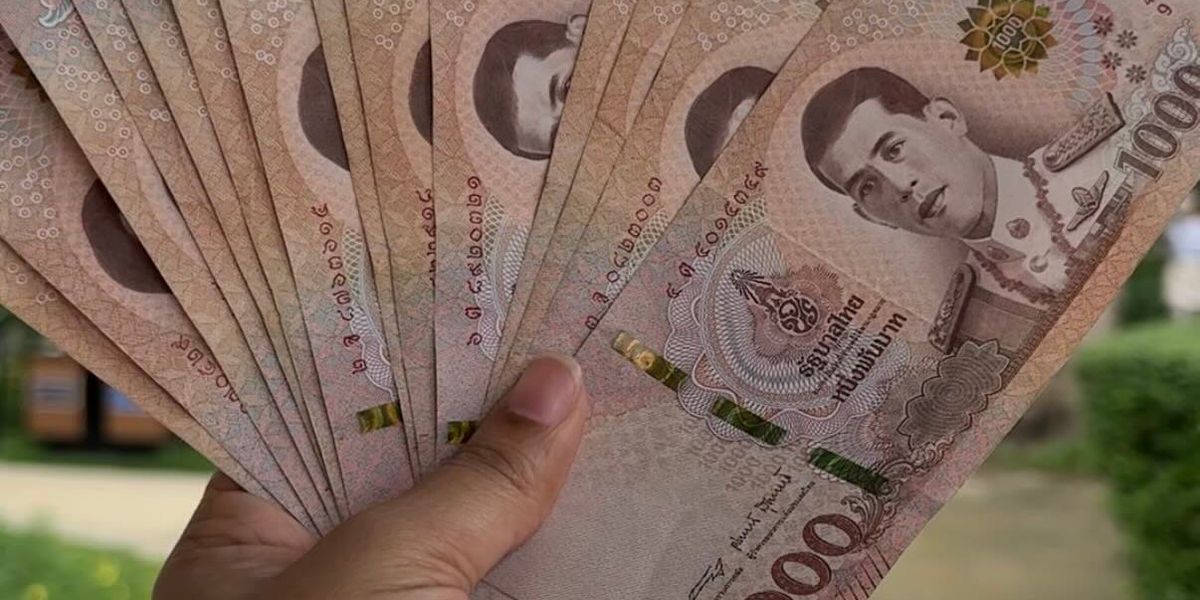
"Do I really need to bother with cash?" "Can I just use PhonePe for everything?"
If you’re flying from India to Thailand in 2026, you’ve probably seen the hype "UPI is finally in Thailand!" or "Pay with GPay at Thai beaches!" No exchanging money. No coins. No bank drama.
It sounds like a dream, right? No currency exchange scams, no fumbling with coins, no hidden bank fees.
But after coming back from Thailand (where I managed to buy a SIM card with ease, then failed miserably to buy a toasted sandwich at 7-Eleven), here’s the truth:
You can use UPI in Thailand, but you cannot depend on it as your only way to pay.
This is my simple, no-nonsense guide to paying in Thailand without bleeding money in fees, bad exchange rates, or avoidable ATM mistakes.
The "UPI" Reality Check: Don’t Rely on It 100%
Let’s rip the band-aid off immediately: You cannot walk around Thailand with only your phone.
Yes, the partnership between India’s NIPL and Thailand’s PromptPay is real. Technically, you can open PhonePe, GPay, or BHIM and scan a Thai QR code.
But here is the catch no one tells you:
Where UPI usually works
UPI tends to work best in bigger, more organized places, like:
- Major malls (Central World, IconSiam)
- BTS Skytrain kiosks
- Large department stores and branded outlets
Where UPI often fails (the places you actually need it)
I find this the most frustrating part, it fails at the places I actually cared about. Many smaller vendors use personal QR codes linked to local bank accounts. International UPI apps often struggle with these.
UPI can be unreliable at:
- Street food stalls
- Small cafes
- Local markets
- Tuk-tuks and smaller taxis
The "Awkward Silence" Factor: Even where it works, server timeouts happen. There is nothing more embarrassing than holding up a busy line at a cafe while your GPay spins in circles.
My Two Cents: Treat UPI as a luxury backup. Do not treat it as your main wallet.
The Best Way to Spend: Forex Cards (Zero Markup)
If you are planning to just swipe your regular HDFC, SBI, or Axis debit card everywhere, stop. You are throwing money away.
The "Double Whammy" Fee Structure:
Forex Markup: Your bank likely charges 3.5% + GST on every swipe.
Bad Rates: The exchange rate they give you is usually terrible.
The Solution? A Forex Card. You need a card that offers zero (or near-zero) markup.
- Wise: This was my personal go-to for the entire trip. I personally loaded Euros (since I’m currently based in the Netherlands), but for you, loading INR works exactly the same way. You convert it to THB in the app instantly, and just tap everywhere. The transparency is unbeatable.
- Niyo (Global/Equitas): This is the crowd favorite for Indian travelers. You load INR, and it auto-converts at live Visa rates when you swipe.
💡 Koko's Tip: Whatever card you choose, open the app and enable "International Usage" before you board your flight. You do not want to be fighting with an OTP while standing at a hotel reception in Phuket.
The ATM Trap: How to Avoid Paying ₹500 per Withdrawal
You will need cash. Thailand is still very much a cash economy, especially for night markets, massages, and street food. But Thai ATMs are brutal if you go in blind.
The "Standard" Fee: Almost every Thai bank (SCB, Bangkok Bank, Kasikorn) charges a mandatory 220 THB fee (approx. ₹530 INR) every time you withdraw. That is a flat fee, on top of whatever your Indian bank charges.
How to Beat the System:
Find the Pink/Purple ATMs: Look for AEON Bank ATMs (often found in malls like Big C or MaxValu). They are known to charge only 150 THB instead of the standard 220.
Go Big or Go Home: Since the fee is fixed, don’t withdraw small amounts. Take out the maximum allowed (usually 20,000 or 30,000 THB) in one go to dilute the cost.
When I learnt this tip, I withdrew the maximum amount the ATMs permitted me to :)
THE MOST IMPORTANT RULE . Or what I would like to call the DCC Scam,Whenever I inserted my card, the ATM screen asked a tricky question: "Do you want to be charged in Euros or THB?" or "Let us do the conversion for you?" I was unaware in the beginning so I selected THB and lost money. But you ALWAYS SELECT "WITHOUT CONVERSION" (THB)
If you let the ATM do the conversion to INR or any other currency , they use their own terrible exchange rate, and you lose 6% to 10% instantly. Always let your card issuer (Wise/Niyo/Indian Bank) handle the conversion.
Cash is King: The "SuperRich" Strategy
Remember, immigration might ask to see 20,000 THB in cash as proof of funds. Plus, cash is just easier to spend, I won't say to carry.
Don't exchange at airports: The exchange rates at airports are daylight robbery.
My Strategy: I carried about 5,000 THB from Netherlands for immediate needs, brought some euros to exchange in the city at a "SuperRich" branch and in the meantime used Wise for all the card transactions
Koko's Tip: Money exchange shops are everywhere, but the rates vary wildly. I noticed that if you walk just two blocks away from the main tourist strip, the rates often get better. Compare a few boards before handing over your cash!
Summary: My Perfect "Payment Stack" for 2026
If I were flying out tomorrow, this is exactly what my wallet would look like:
Primary: Wise / Niyo Card (Used for hotels, big meals, and 7-Eleven).
Secondary: Cash (Thai Baht) (Essential for street food, tuk-tuks, and souvenirs).
Backup: UPI App (Good for malls if I run out of cash).
Emergency: One Standard Credit Card (Kept locked in the hotel safe, just in case everything else fails).
Final thought: Thailand is generally very safe, but never keep all your eggs (or Baht) in one basket. Split your cash up, travel smart, and enjoy that Pad Thai!